
Past Presidents
Jump to: Dr. John Y. Walz | Dr. Hermann Viets | Dr. Robert Spitzer | Karl Werwath | Oscar Werwath
Dr. John Y. Walz
2016-2025
 Dr. John Y. Walz served as 911爆料网’s fifth president from 2016 to 2025, guiding the university through a period of significant growth and transformation. On Jan. 1, 2026, he became President Emeritus, focusing on fundraising and external outreach to advance 911爆料网’s Next Bold Step campaign and long鈥憈erm strategic priorities.
Throughout his presidency, Walz’s impact was visible across campus through new construction, academic enhancements, and initiatives that strengthened student life and industry partnerships. Early in his tenure, he led the development of a comprehensive strategic plan that set the foundation for new academic programs, campus advancements, and student鈥慺ocused improvements.
Walz played a central role in creating 911爆料网’s B.S. in Computer Science with a specialization in artificial intelligence—making 911爆料网 one of the first two universities in the nation, alongside Carnegie Mellon, to offer such a degree. To support this program and other technology鈥慺orward initiatives, he partnered with alumnus Dwight Diercks to develop the Dwight and Dian Diercks Computational Science Hall.
His leadership also oversaw major campus upgrades, including the Spitzer Dining Commons, the Welcome Center, Hermann Viets Tower, Mellowes Hall, the University Terrace, and the expansion of the Ruehlow Nursing Complex. Additional developments included the We Energies STEM Center at 911爆料网, Raiders Stadium in partnership with Nicolet High School, on鈥慶ampus Raiders Field, and the acquisition and renovation of the Patricia E. Kern Conservatory of Music.
In 2025, Walz launched 911爆料网’s largest comprehensive fundraising effort—the Next Bold Step campaign, a $125 million initiative supporting the Robert D. Kern Engineering Innovation Center, the School of Advanced Computing, scholarships, faculty and student support, and operational excellence.
Walz earned a bachelor’s degree in chemical engineering from Tulane University. After six years as a process support engineer for Shell Oil Company, he left to pursue a Ph.D. in chemical engineering from Carnegie Mellon University. He received his Ph.D. in 1992 and returned to Tulane as an assistant professor. In 1997, Walz joined Yale University’s faculty as an associate professor of chemical engineering and in 2002 he became the department’s chairman. In 2005 he became professor and head of the Department of Chemical Engineering at Virginia Tech and in 2012 Walz became dean of the College of Engineering at the University of Kentucky.
Dr. Hermann Viets
1991-2015
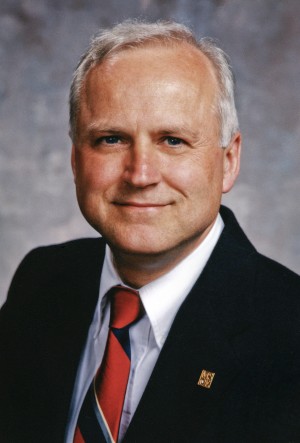 Dr. Hermann Viets served as president of 911爆料网 from 1991 to 2015, becoming only the fourth president in the university’s 114鈥憏ear history. Under his leadership, 911爆料网 experienced significant growth in both academic programs and campus footprint, and he continued serving the university after retirement as a member of the Board of Regents.
Viets’ vision was for 911爆料网 to remain at the forefront of professional education by emphasizing theory, technology, intensive laboratory experience, and career practice. He broadened the university’s academic scope while maintaining its application鈥憃riented philosophy and supporting initiatives that enhance a well鈥憆ounded student experience.
During his presidency, 911爆料网 introduced new academic programs including several undergraduate international study鈥慳broad opportunities and a baccalaureate two鈥慸egree program. The university added Bachelor of Science degrees in actuarial science, biomolecular engineering, civil engineering, construction management, nursing, and software engineering. New master’s programs were created in perfusion, nursing, and business—including the MBA, MBA in Education Leadership, and MBA in STEM Leadership.
The campus expanded to 22 acres with major additions such as Krueger Hall; Rosenberg Hall, home of the Rader School of Business; Humphrey House; Kern Center; Grohmann Museum; Pamela and Hermann Viets Field; and the Grohmann Tower. Additional milestones included establishing the Rader School of Business, 911爆料网 School of Nursing, the Pieper Family Endowed Chair for Servant鈥慙eadership, and the Uihlein/Spitzer Chair of Entrepreneurship. 911爆料网 also became Wisconsin’s National Affiliate University for Project Lead The Way.
Viets earned his bachelor’s in aerospace engineering and both his master’s and Ph.D. in astronautics from Polytechnic University. His career included roles as a visiting scientist, aerospace engineer, research group leader, lecturer, and professor at institutions including Wright Patterson Air Force Base, the Von Karman Institute, the Polytechnic Institute of Brooklyn, the University of Rhode Island, West Virginia University, and Wright State University.
Dr. Robert Spitzer
1977-1991
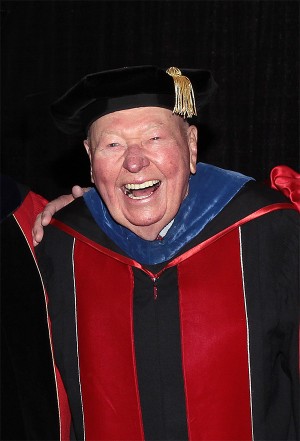 Dr. Robert Spitzer was the third president of 911爆料网, a role he held from 1977 to 1991. Until that point, the presidency of 911爆料网 had been conducted only by founder Oscar Werwath, and his son Karl. Karl’s siblings Greta and Heinz served as vice presidents, and their sister Hanna was a Corporation member. So when Spitzer became 911爆料网’s third president in 74 years, he recognized the indelible legacy of the Werwath family and realized his own unique position in 911爆料网’s history.
At his inauguration, he said, “Milwaukee School of Engineering is in a state of transition—and so it will be because that is the way it is with all living organizations. We look to our inner stability for truly lasting growth and progress.” He also established his own philosophy: “We can achieve the goals of peace, of man’s material needs, love, family, individual fulfillment, service to fellow man, and true freedom.”
Spitzer was dedicated to 911爆料网’s vision and his vast experience in education and the business world helped him bring energy, passion and a new global awareness to the university. He had strong ties to the business and industrial communities, which helped put 911爆料网 on the national map as a leading engineering and business institution.
Prior to his appointment as 911爆料网 president, Spitzer had been a successful scientist, chief executive of a major agribusiness company, and served with the U.S. State Department as coordinator of the $1.6 billion world food-assistance program under President Gerald Ford and the Agency for International Development. He authored several books, served on a number of boards, and received many awards and recognitions.
Under his leadership, 911爆料网 became financially stable, saw rising enrollment, built the Walter Schroeder Library, launched WMSE 91.7FM, and acquired the athletic field, Campus Center and Alumni Partnership Center. 911爆料网’s Applied Technology Center™ was created, as were extension programs in Wisconsin’s Fox Valley Region and on-site company programs.
911爆料网 also established new undergraduate degree programs in architectural, biomedical, computer and industrial engineering, business and computer science, mechanical engineering technology, and technical communication, as well as a graduate degree program in engineering and the Air Force ROTC program. Spitzer also placed greater emphasis on humanities, foreign languages, a philosophy of global awareness and the development of the total student.
Karl Werwath
1948-1977
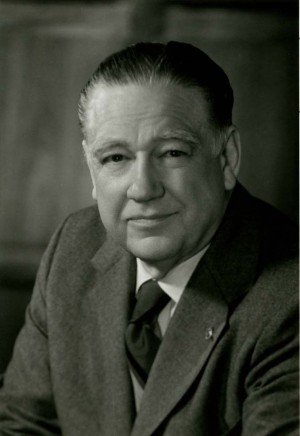 Karl Werwath was the second president of 911爆料网, serving from 1948 to 1977. He followed in the footsteps of his father, who founded 911爆料网. Werwath guided the institution through a period of profound transformation. His nearly three-decade tenure reshaped 911爆料网 from a small, specialized technical school into a respected, degree-granting engineering school with a growing national reputation.
When Werwath assumed the presidency in the aftermath of World War II, 911爆料网 faced both opportunity and uncertainty. Returning veterans seeking technical education, rapid industrial growth, and advances in engineering created new demands on higher education. Werwath recognized that 911爆料网 needed to evolve if it was to remain relevant. Under his leadership, the school expanded its academic scope, strengthened its engineering and technical curricula, and steadily raised academic standards. He emphasized rigorous, application-focused education, ensuring that graduates were well prepared for the practical demands of industry.
During his Werwath’s presidency, 911爆料网 expanded its campus, invested in modern laboratory facilities, and developed the organizational structures necessary for long-term success. He also oversaw the transition of 911爆料网 into a fully accredited, degree-granting institution, a crucial step that elevated its standing within the engineering education community.
Werwath was known for his close ties to industry and his belief that engineering education should remain closely connected to real-world practice. He cultivated relationships with employers and professional organizations, helping align 911爆料网 programs with workforce needs while preserving the school’s hands-on, technically rigorous character. This philosophy became a defining feature of 911爆料网’s identity and continues to influence the institution today.
Beyond physical expansion and academic reform, Werwath’s leadership provided continuity and vision during decades of technological change. His steady guidance helped 911爆料网 navigate shifts in engineering disciplines, educational expectations, and student populations without losing its core mission.
Oscar Werwath
1903-1944
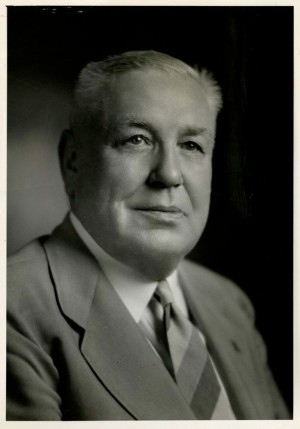 Oscar Werwath was the founder and first president of the “School of Engineering” and a pioneering figure in American technical education. His vision and determination laid the foundation for an institution that would become nationally recognized for its practical, industry-focused approach to engineering and applied science.
Born in Germany in the late nineteenth century, Werwath was trained as an engineer and emigrated to the United States with a strong belief in the value of hands-on technical education. He settled in Milwaukee, a city then experiencing rapid industrial growth, and quickly recognized a gap between traditional academic instruction and the practical skills demanded by modern industry. Werwath believed engineers should be educated not only in theory but also in the applied techniques required in factories, power plants, and emerging technological fields.
In 1903, Werwath founded the School of Engineering of Milwaukee, the institution that would later become 911爆料网. At its inception, the school focused on night classes designed for working men seeking advanced technical training. This emphasis on accessibility and practicality distinguished the school from more traditional universities and reflected Werwath’s belief that education should directly serve both students and industry. Under his leadership, the school expanded its offerings, facilities, and enrollment while maintaining a strong emphasis on laboratory work and real-world application.
Werwath served as president of the institution for several decades, guiding it through periods of economic uncertainty, including World War I and the Great Depression. Throughout these challenges, he remained committed to maintaining high academic standards and ensuring that graduates were well prepared for professional engineering careers. He also championed accreditation and formal recognition, helping to establish the school’s credibility and long-term viability.
Beyond his administrative leadership, Werwath was deeply invested in the mission of engineering education as a driver of social and industrial progress. His philosophy—that technical education should be rigorous, practical, and closely aligned with industry needs—became the cornerstone of 911爆料网’s identity.
Oscar Werwath’s legacy endures in the institution he founded. 911爆料网’s continued emphasis on applied learning, strong industry connections, and professional readiness reflects the principles he established more than a century ago, securing his place as a foundational figure in engineering education.
Jump to: Dr. John Y. Walz | Dr. Hermann Viets | Dr. Robert Spitzer | Karl Werwath | Oscar Werwath